

Today, healthcare facilities are not just treatment areas. They are built to ensure patient comfort, increase efficiency and ensure hygiene.
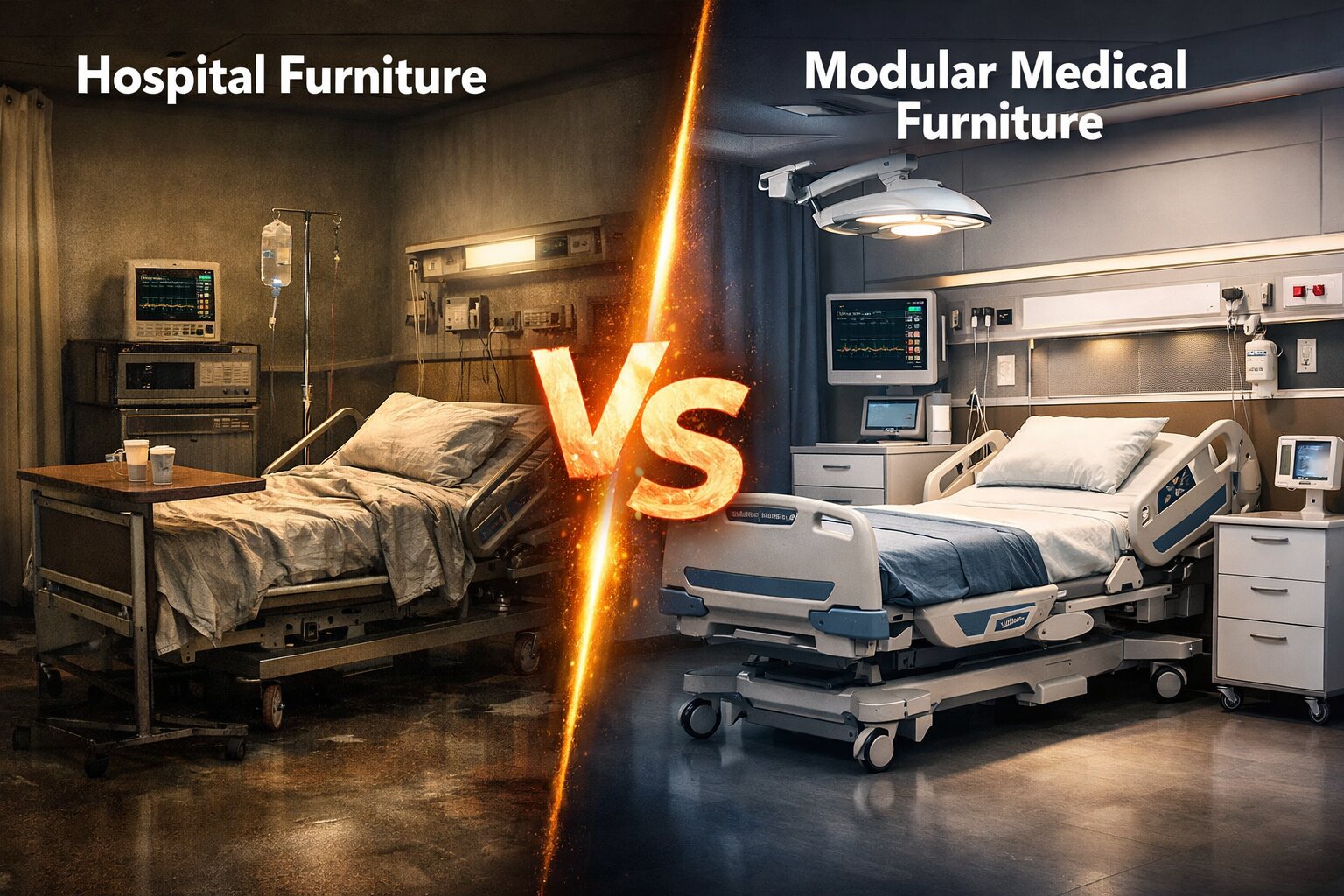
One of the most important decisions in this transformation is choosing between hospital furniture v/s modular furniture.
The biggest and most significant decision of any hospital, clinic or nursing home is whether to go with traditional hospital furniture or upgrade to modular medical furniture.
What is Traditional Hospital Furniture?
It refers to fixed or non-flexible equipment used in healthcare settings. These include hospital beds, bedside lockers, examination tables and trolleys that are designed for single-purpose use.
These have a fixed structure with limited flexibility. They are long-lasting and cost-effective. They have standardized design across facilities.
Traditional furniture is the pillar of hospitals for decades; they lack adaptability in modern, fast-changing healthcare environments.
What is Modular Medical Furniture?
They are designed with flexibility, customization and efficiency in mind. These units are built using interchangeable parts that can be adjusted or upgraded based on needs.
This furniture is flexible and can be tailored as per the requirements of the healthcare facility. They have a space-saving configuration.
The modular hospital furniture can be assembled, disassembled and relocated easily. They have modern aesthetics with improved functionality.
The modular systems are used in multi-specialty hospitals, ICUs and clinics where requirements change often.
Difference between Hospital Furniture and Modular Medical Furniture
- Design and Flexibility: Traditional medical furniture comes with a fixed design and serves a single purpose. It cannot be modified easily once you have installed it. However, modular medical furniture is designed to be flexible. They can be expanded, rearranged or adjusted according to the changing healthcare facility needs, making it ideal for modern healthcare environments.
- Customization: Hospital furniture follows standard designs and sizes, offering very limited customization. This will restrict functionality in specialized departments. Modular medical furniture is customizable. Hospitals can design layouts, add components or modify units according to specific requirements like ICU setups, labs or OPDs.
- Space Utilization: Traditional furniture will not use space optimally, especially in compact healthcare units. There is adaptability, and they occupy fixed areas. Modular furniture optimizes space. Its smart design ensures better organization, making it perfect for urban hospitals where space is limited and needs to be used wisely.
- Cost and Long-Term Value: The initial cost of the traditional medical furniture is lower, which makes it apt for smaller setups or budget-conscious facilities. Replacing or upgrading can be expensive over time. Modular medical furniture may require higher upfront investment, but it offers good long-term value because of its durable nature, upgrade options and reduced need for complete replacement.
- Maintenance and Upgradability: Maintenance of traditional hospital furniture is easy. However, if you want to upgrade them, it is difficult as they are not designed for changes. On the other hand, modular furniture is easy to maintain and upgrade. The individual parts can be easily replaced or improved without changing the entire unit, making it the most efficient and future-ready solution.
Modular Hospital Furniture Benefits
Modular furnishing is becoming the preferred choice in modern healthcare settings.
- Maximum Space Utilization: Space constraint is a common issue in many hospitals. Modular furniture allows efficient use of the available space, especially in urban healthcare facilities.
- Good Workflow Efficiency: as customization is easily possible, the hospital staff can organize equipment and tools in a way that reduces movement and saves time.
- Better Hygiene and Infection Control: Modular furniture is made from materials like stainless steel. They are thus easy to clean and are resistant to contamination, which is significant in maintaining hygiene standards.
- Scalability: Healthcare facilities grow over time. Modular furniture can be expanded or modified without replacing the entire setup.
- Cost-Effective: Initial investment is higher, but modular furniture reduces replacement and renovation costs over time.
Traditional V/s Modular Furniture – When to Choose
Traditional Furniture is ideal for small clinics, budget-constrained setups, rural healthcare centres, and facilities with minimal expansion plans.
Modular Medical Furniture is ideal when you run a multi-speciality hospital. If you require frequent upgrades, want to improve patient experience, optimize space and aim for modern future-ready infrastructure, modular medical furniture is an ideal choice.
Quick Facts Checks – Hospital Furniture v/s Modular Medical Furniture
| Parameter | Hospital Furniture | Modular Medical Furniture |
| Structure | Fixed and Non Movable | Flexible and Reconfigurable |
| Functionality | Single-use Design | Multi-Functional Units |
| Installation | Permanent | Quick Assembly and Relocation |
| Ergonomics | Basic Comfort | Advanced Ergonomic Design |
| Technology Integration | Minimal or None | Supports Modern Integration |
| Aesthetic Appeal | Traditional Look | Modern and Sleek Design |
| Use Cases | General wards, small clinics | ICUs, labs and advanced hospitals |
Materials by Medical Furniture Manufacturer in Modular Furniture
Dedicated medical furniture suppliers and exporters often use high-grade materials such as stainless steel, powder-coated metals, and medical-grade plastics for lightweight structures.
These materials ensure durability, safety and compliance with national and international healthcare standards.
The future of healthcare infrastructure is towards modularity. Smart healthcare facilities are integrating IoT-enabled furniture, ergonomic patient beds, multi-functional storage systems and eco-friendly materials.
Choosing between traditional medical furniture and modular medical furniture is beyond cost- it is all about patient care, future readiness and durability.
If you aim to build a modern, scalable and efficient healthcare facility, modular furniture is a smarter investment. If you have smaller setups with fixed needs, traditional furniture offers reliability.
Planning to upgrade your hospital or clinic with smart, efficient and future-ready furniture? If so, partner with a reliable hospital furniture manufacturer who will deliver furniture that performs today and adapts tomorrow.
Shift to modular medical furniture and transform your healthcare environment today!
FAQs
- What is the difference between modular and traditional hospital furniture?
Modular furniture is flexible and can be customized easily. Traditional hospital furniture is fixed and rigid. United Poly manufactures premium-quality modular and traditional medical furniture. - Is modular furniture expensive?
They have a higher upfront cost but offer long-term value due to flexibility and reduced replacement costs. - Which type of furniture is best for modern hospitals?
Modular medical furniture is better for modern hospitals due to its space optimization, efficiency and adaptability. United Poly delivers tailored modular furniture aligned with your healthcare facility’s needs.
About the Author
United Poly is an experienced and trusted manufacturer of the best quality medical tools, holloware, furniture and equipment. With more than 2 decades of industry experience, the brand has successfully set benchmarks for medical equipment and tools.
Known for precision engineering, hygiene-centric designs and durability, United Poly has delivered solutions tailored to modern healthcare needs.